Psoriasis is a chronic autoimmune skin condition that affects millions worldwide, yet it remains widely misunderstood. This blog covers everything you need to know: Imagine waking up every morning to skin that itches, flakes, and refuses to heal, regardless of what you try. For over 125 million people worldwide, it's everyday life with psoriasis. Yet …

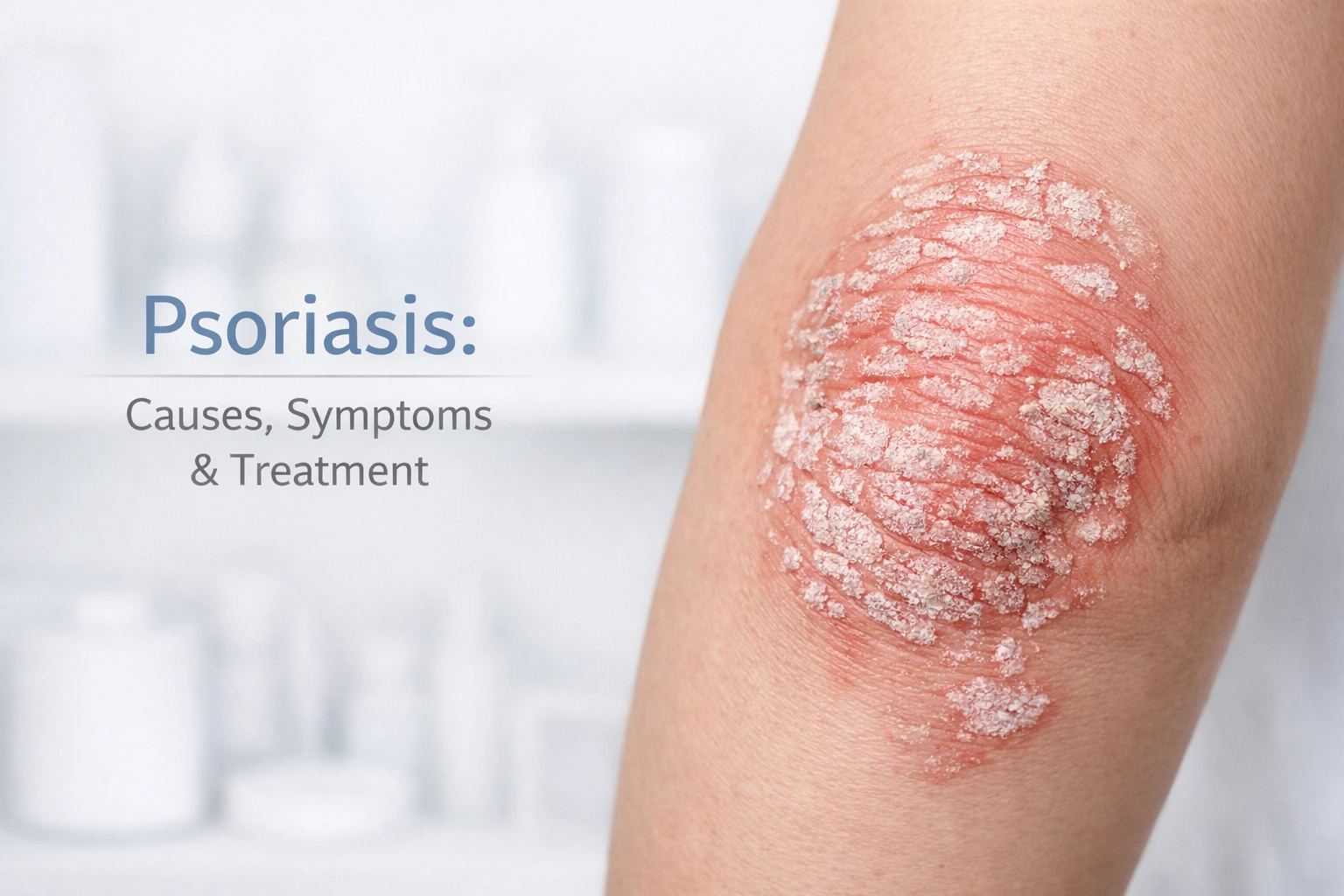
Psoriasis is a chronic autoimmune skin condition that affects millions worldwide, yet it remains widely misunderstood. This blog covers everything you need to know:
- What psoriasis is and how it differs from other skin conditions
- The root causes of psoriasis, from genetics to lifestyle triggers
- The different types of psoriasis and how to identify them
- Psoriasis initial symptoms to watch out for early
- When and why to consult a dermatologist in India
- The most effective psoriasis treatment options available today
- Practical diet and lifestyle tips for long-term skin health
Imagine waking up every morning to skin that itches, flakes, and refuses to heal, regardless of what you try. For over 125 million people worldwide, it’s everyday life with psoriasis. Yet despite how common it is, psoriasis is one of the most misdiagnosed and mismanaged skin conditions, often dismissed as “just dry skin” or confused with eczema.
So what exactly is this condition? And most importantly, what can actually help? If you’ve been searching for clear, medically sound answers, you’re in the right place.
What is Psoriasis?
To define psoriasis, it is a chronic, non-contagious autoimmune skin disease in which the immune system mistakenly accelerates the skin cell lifecycle. Normally, skin cells are regenerated in about 28–30 days. In psoriasis, the process takes just 3-4 days, leading to a buildup of cells on the skin’s surface.
It is not just a cosmetic problem, as many would think. It is a systemic disease that may also involve the joints (psoriatic arthritis), the nails, and overall quality of life.
What Causes Psoriasis?
The exact causes of psoriasis are still not well understood, but it is clear that a combination of genetic and environmental factors influences it. Some of the major causes of psoriasis include:
- Genetics: If a person has a family history of the disease, the risk of developing it increases.
- Immune System: An abnormality in the immune system that leads to the overproduction of skin cells.
- Infections: Streptococcal throat infections, especially in children, may also cause the disease.
- Stress: Psychological stress is one of the most established causes of the disease.
- Medications: Some medications, including beta-blockers, lithium, and antimalarials, may also be a cause of the disease.
- Lifestyle factors: Smoking, excessive alcohol consumption, and obesity are linked to more severe presentations.
What are the Types of Psoriasis?
Psoriasis is not the same in everyone. There are several forms of psoriasis, including:
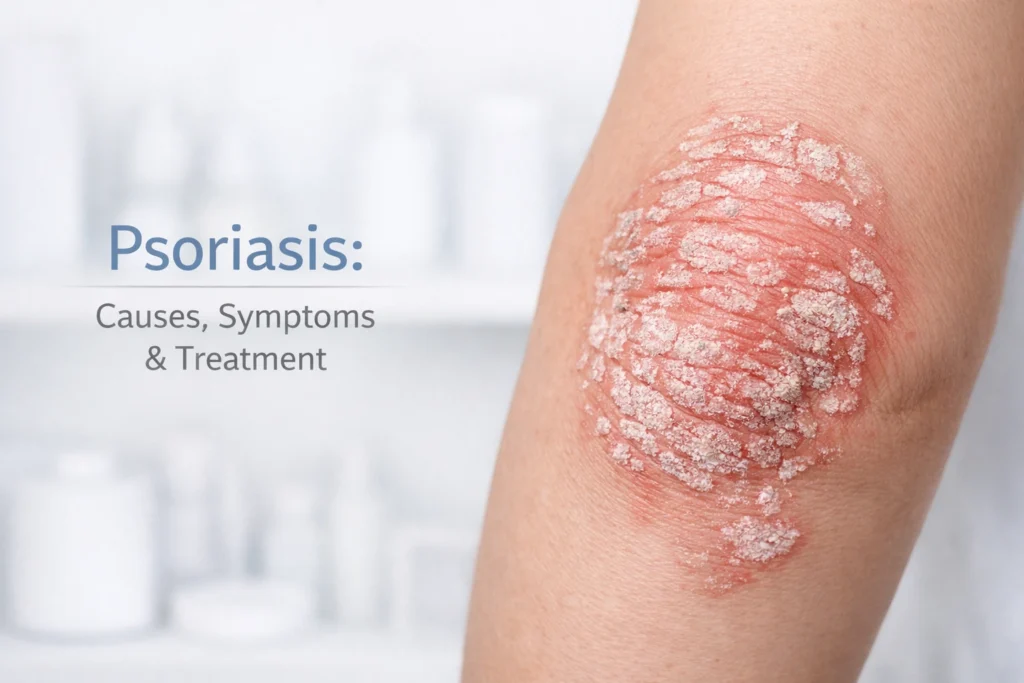
- Plaque Psoriasis is the most common type of psoriasis. It is characterized by raised, red, scaly patches on the elbows, knees, scalp, and back.
- Guttate Psoriasis is characterized by small, drop-shaped lesions that are caused by a bacterial infection. It is common in young people.
- Inverse Psoriasis is characterized by areas of the body where skin folds occur, such as under the breasts, in the groin, and in the armpits. Smooth, red, scaly patches characterise it.
- Pustular Psoriasis is characterized by blisters filled with pus, leading to skin redness.
- Erythrodermic Psoriasis is a severe and rare type of psoriasis. It is characterized by widespread redness and skin shedding in the sheets.
- Psoriatic Arthritis is the combination of the two and is characterized by joint pain and inflammation.
Signs & Symptoms of Psoriasis
Identifying the early signs of psoriasis can make a significant difference. Common signs include:
- Red, inflamed patches of skin covered with thick, silvery scales
- Dry, cracked skin that may bleed
- itching, burning, or soreness around the affected area
- Thickened, pitted, or ridged nails
- Swollen and stiff joints (in psoriatic arthritis)
- Scalp scaling that can be mistaken for severe dandruff
The initial symptoms of psoriasis often appear as small, scaly patches that gradually increase. Some patients experience periods of remission followed by sudden flare-ups.
When Should You See a Dermatologist?
- Your symptoms are getting worse or spreading even after using over-the-counter treatments.
- Your itching or discomfort is affecting your sleep or your daily activities.
- You are experiencing pain in your joints along with your symptoms.
- Your skin turns red and covers a lot of your body.
- You are unsure whether your symptoms are caused by psoriasis or another skin condition.
You must consult the best dermatologist for psoriasis early to prevent complications and improve your outcome.
How is Psoriasis Diagnosed?
Dr. Soma Sarkar at Savoir Wellness typically conducts a thorough physical examination of the skin, scalp, and nails. In unclear cases, a skin biopsy may be performed to rule out other dermatological conditions. Blood tests can help identify signs of inflammation and rule out psoriatic arthritis. Accurately defining what psoriasis disease is in a specific patient, its type, extent, and severity, guides the entire treatment plan.
Psoriasis Treatment Options
Although a permanent cure for the disease has not yet been found, it has been established that it is highly manageable with the right treatment.
- Topical Treatment: This is the first line of treatment, which involves the use of corticosteroids to ease inflammation; vitamin D analogues to slow the growth of skin cells; coal tar, retinoids, and salicylic acid to remove the scaly buildup
- Phototherapy (Light Therapy): The procedure involves exposing the skin to UVB or PUVA (psoralen and UVA) rays, which slow the rapid growth of skin cells.
- Systemic Treatment: This approach involves the use of methotrexate, cyclosporine, and retinoids for moderate-to-severe disease.
- Biologics: This method is the most precise and effective treatment for the disease, targeting the immune system with the help of the best dermatologist for psoriasis.
Diet & Lifestyle Tips for Psoriasis
While managing Psoriasis, you need to do more than just take your medicines. You also need to make the following changes in your lifestyle to reduce the frequency and severity of Psoriasis attacks:
- Incorporate an anti-inflammatory diet rich in fruits, vegetables, whole grains, and omega-3 fatty acids like flaxseeds and walnuts.
- Avoid alcohol and tobacco, as they can increase Psoriasis severity by a huge factor.
- Practice stress management techniques, such as yoga, meditation, and exercise, to reduce psoriasis flare-ups.
- Use moisturising creams to prevent excessive peeling.
- Avoid injury to your skin, as Psoriasis can develop at the site of injury in a condition known as the Koebner phenomenon.
- Maintain a healthy weight, as obesity can increase Psoriasis severity.
Conclusion
Psoriasis is a condition that does not lend itself to superficial treatment. It is a complex condition that demands a holistic, evidence-based approach. From learning about the initial symptoms of psoriasis to understanding the various treatment options available for this condition, it is only through the right kind of medical intervention that one can hope to embark on a journey to healthy, clear skin. Dr. Soma Sarkar of Savoir Wellness is a practitioner committed to providing all her patients with the information they need to manage this condition with confidence. If you or a loved one is suffering from this condition, then do not wait any longer and seek out a trusted dermatologist in India.
Also Read – Eczema Treatment Guide: Causes, Symptoms & Skincare Tips That Work
FAQs
1. Is Psoriasis Contagious?
No, psoriasis is not contagious. This is an autoimmune disorder that occurs within the body’s immune system.
2. Can psoriasis be permanently cured?
While there is no permanent cure for psoriasis, the condition can be managed with the right treatment plan. Many patients can achieve long periods of remission with medical guidance.
3. What is the best treatment for psoriasis?
The best psoriasis treatment depends on its type and severity, making it critical to consult the best dermatologist. The best dermatologist for psoriasis can provide you with the best treatment for your condition.
4. Does stress trigger psoriasis?
Yes, stress is one of the best-established causes of psoriasis. Managing stress can significantly reduce the frequency of outbreaks.
5. Which doctor treats psoriasis?
The best dermatologist to consult regarding your condition is one with experience treating inflammatory conditions. Dr. Soma Sarkar at Savoir Wellness is considered among the best dermatologists in India for all types of psoriasis.